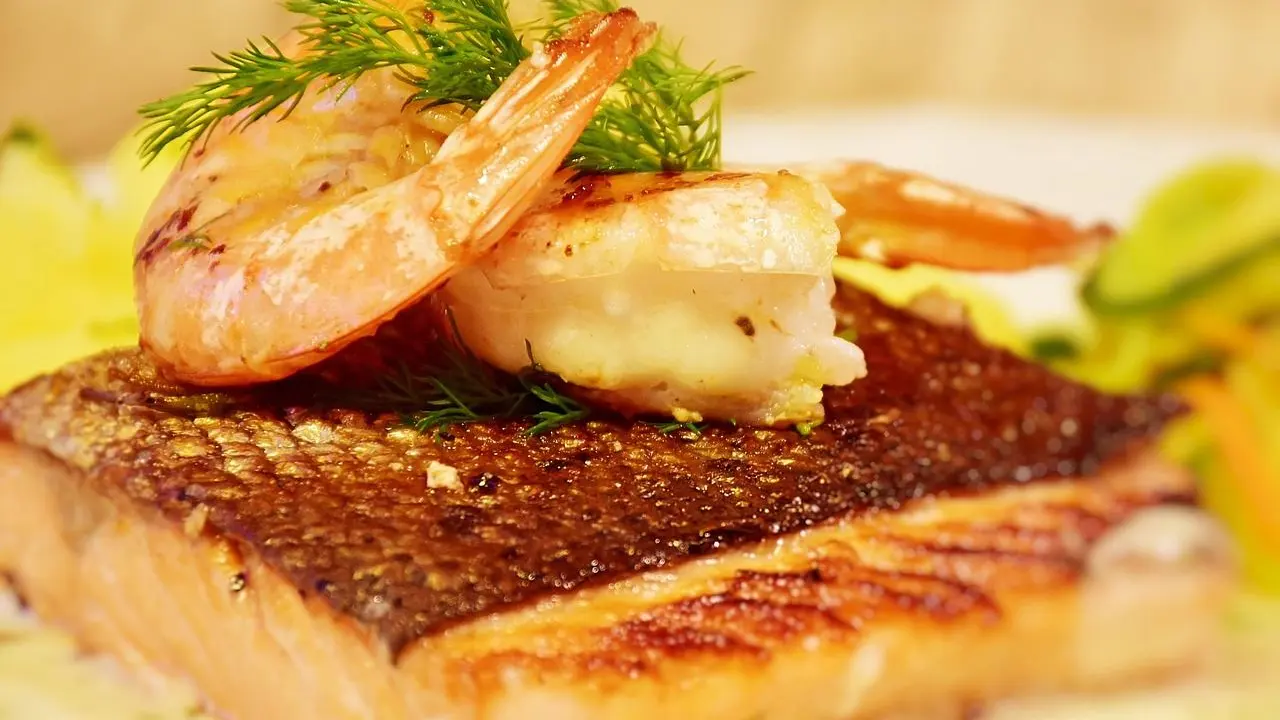
Worried your zander skin will stick or turn soggy? This pan seared zander recipe fixes that: dry the fillet, sear it skin-side down in a hot pan, and don’t flip until the skin releases itself.
Looking for more fish dishes? Browse the seafood recipes section for the full collection.
| Item | Value |
|---|---|
| Serves | 4 people |
| Zander fillets, skin on | 600 g |
| Total time | 27 min |
| Energy per serving | 402 calories |
| Time pressing the fillets flat in the pan | 30 seconds |
These figures come from a German-style zander recipe on FoodCraft. Recipes get updated and your fillets and pan will differ, so check the source before you rely on the figures.
What you need for pan-seared zander
Zander has pearly white flesh that flakes easily, which suits a quick sear. Some English-language recipes, such as KptnCook’s remoulade version, call the same fish pike perch.
The quantities below serve 4 people and follow the FoodCraft recipe, which lists 27 minutes in total and 402 calories per serving.
- 600 g zander fillets with skin
- 50 g wheat flour, for dusting the skin side only
- 100 g smoked lardons
- a finely diced yellow onion
- 40 g unsalted butter, cubed
- 2 tbsp sunflower oil
- juice of half a lemon
- chopped flat-leaf parsley, grey sea salt and ground white pepper
The smoked lardons and brown butter are the flavour base. According to FoodCraft, they add a salty, woody depth to the delicate fish.
Prep the fillets: dry, score and season
Dry skin decides whether you get crackle or chew. FoodCraft is blunt about it: damp skin will never get crispy, so pat the fillets thoroughly with paper towels.
For extra insurance, Tasting Table suggests dabbing the skin dry and letting the fish sit on a wire rack for about an hour at room temperature. Fine Dining Lovers also advises taking the fish out of the fridge ahead of cooking.
Work through this checklist before the pan goes on:
- Defrost fully if the fillets were frozen, then dry them again.
- Pat both sides with paper towels until no moisture shows.
- Score the skin lightly (see below).
- Season with grey sea salt and white pepper.
- Dip only the skin side in flour and tap off the excess.
Scoring keeps the fillet flat. FoodCraft makes three shallow scores on the skin side to stop the fillet curling, while KptnCook’s pike perch recipe makes 2-3 diagonal, shallow cuts. Keep them shallow: cut too deep and the fish can break up in the pan, as Fine Dining Lovers warns.
The flour should be a thin veil, not a bread crust. Tap firmly so only a whisper stays on the skin.
Step by step: sear, baste and finish
This is the no-flip method from FoodCraft. It uses a stainless steel pan and finishes the fish with butter instead of turning it.
- Heat the 2 tbsp of sunflower oil in the pan until it is smoking hot.
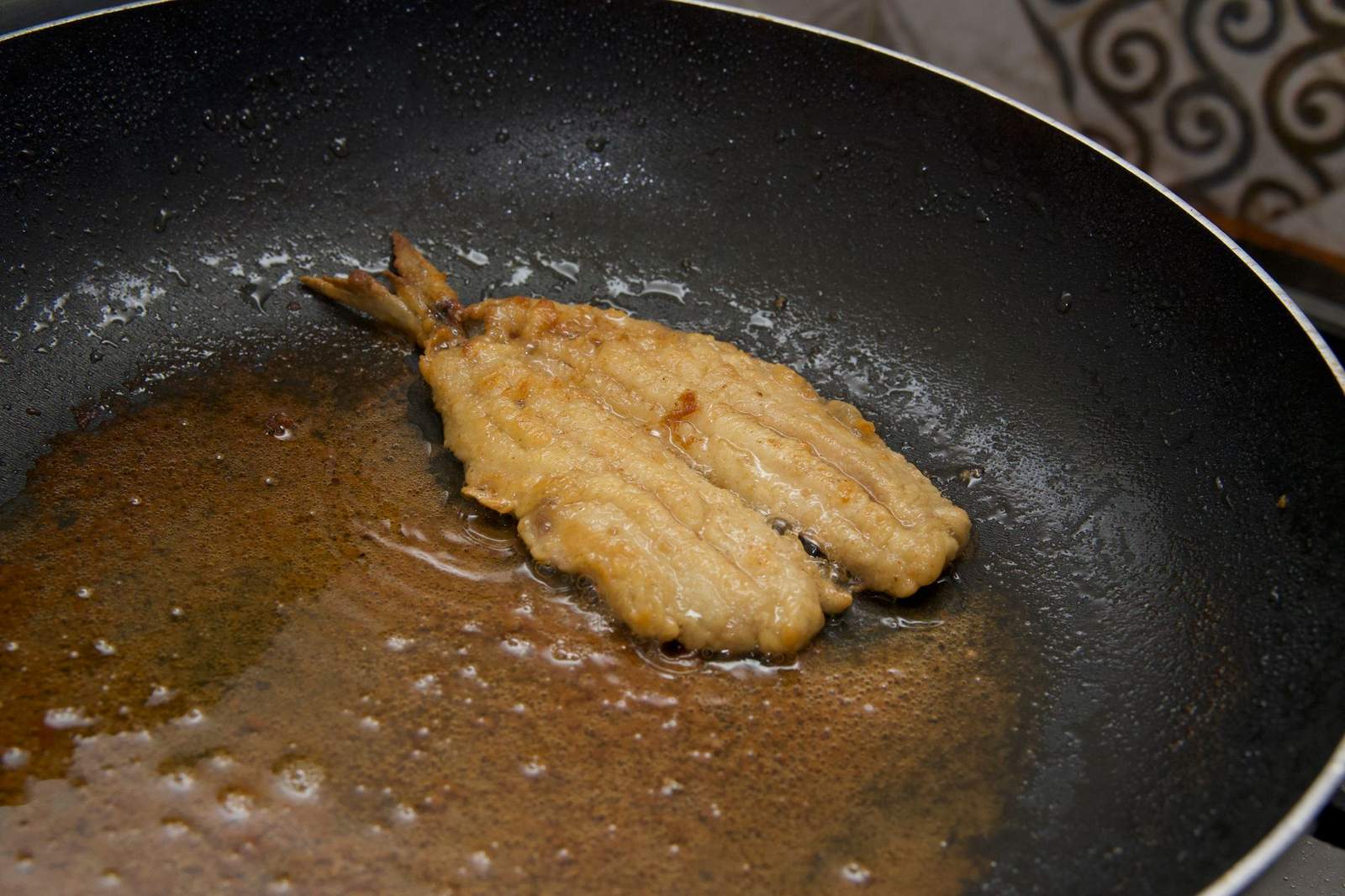
- Lay the fillets in skin-side down and press them with a spatula for 30 seconds so the whole skin touches the pan.
- Leave them alone. Let the skin brown until it releases itself from the pan.
- Add the lardons and diced onion to the empty spaces. When the onion turns translucent, add the 40 g of butter.
- As soon as the butter foams and smells nutty, spoon it over the flesh again and again. Do not flip the fish.
- Squeeze in a little lemon to loosen the pan juices, then scatter with parsley.
The butter basting cooks the top of the fillet gently while the skin stays crisp underneath. If the butter browns too quickly, FoodCraft suggests adding a drop of cold oil to stop the cooking.
Choosing the pan, oil and heat
A hot, steady pan matters more than any gadget. Tasting Table says to get a nonstick or stainless steel pan hot enough for the initial sear, but not scorching, or the fillet will burn before it cooks through.
Each pan type has a catch. Fine Dining Lovers notes that oil tends to form tiny beads on non-stick coatings, and that cast iron can be hard to control and prone to spitting, smoking oil.
For the fat, Fine Dining Lovers recommends a neutral cooking oil such as avocado oil over olive oil, which has a low smoke temperature. FoodCraft uses sunflower oil.
If you prefer to flip
You can turn the fillet if you like. Tasting Table heats a few tablespoons of oil until it smokes, sears the skin side for 30 to 60 seconds, then lowers the heat to medium-high.
Wait around 3 to 4 minutes until the skin curls and loosens from the pan, then flip gently. Finish the flesh side for a couple of minutes, to about 75 percent doneness, and add butter and aromatics such as garlic or dill.
The parchment shortcut
A sheet of parchment under the fish is another route to even crisping. Fine Dining Lovers cuts the paper slightly bigger than the fillet, fixes it to the pan with a few drops of oil, and cooks the skin side for five to six minutes.
It then turns the heat off and flips the fish to finish. The aim is to cook the fish 80% on the skin side and 20% on the flesh side.
Sauces and sides that suit zander
FoodCraft pairs its zander with a German-style mustard sauce, which fits the brown butter and smoked lardons already in the pan.
For something cooler and crunchier, KptnCook serves pan-fried pike perch with a celeriac remoulade. Its version uses 300 g of fillet for 2 portions and takes 30 minutes. The remoulade is built from:
- 60 ml mayonnaise
- 20 g fresh chives
- 2 tsp Dijon mustard
- half a lemon
- half a celery root, peeled, washed and grated
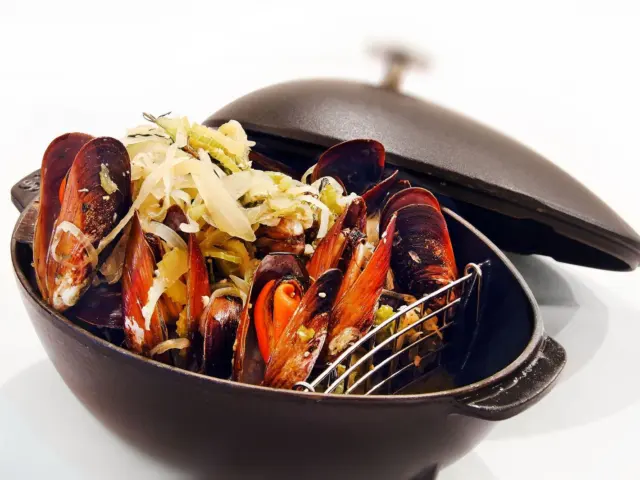
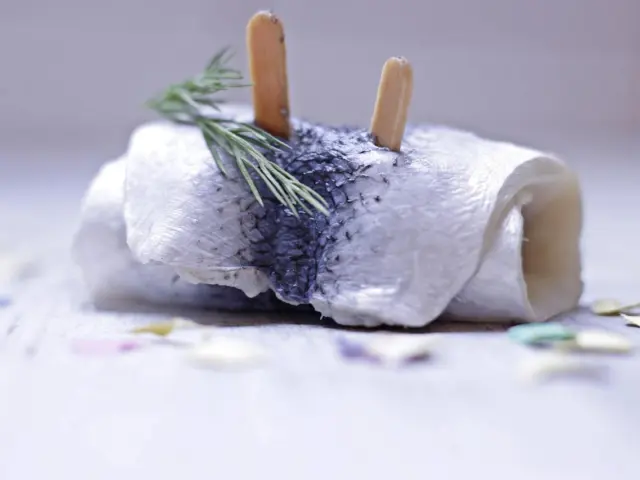
Planning a full menu? For a starter, read how to cook mussels in white wine. For a very different fish dish, try the rollmops recipe.
How do you know the zander is done?
Look at the flesh, not the clock. FoodCraft says the fish is ready when the flesh is opaque in the centre and flakes under finger pressure.
Fine Dining Lovers gives the same visual cue for the skin side: crispy skin and opaque flesh. Thicker or thinner fillets will shift the timing, so trust what you see in the pan.
Serve at once. FoodCraft says this dish must be eaten immediately to keep the skin crisp, and that you should not freeze it once cooked.
Frequently asked questions
Why does my zander skin stick to the pan?
Show answer
Usually the fish was turned too soon. Tasting Table notes that early on the fillet will most likely still stick and resist the spatula, but once the moisture has evaporated the skin curls and loosens by itself.
Do I have to flip the fillet?
Show answer
No. FoodCraft never flips the zander and relies on rising heat and butter basting to keep the flesh pearly. Tasting Table and Fine Dining Lovers do flip, but only after the skin side has done most of the cooking.
Can I cook frozen zander fillets?
Show answer
Yes, if they are defrosted first. KptnCook says to defrost the fish if frozen and pat the skin dry, and Fine Dining Lovers stresses thorough defrosting and drying the surface before cooking.
Can I keep leftovers?
Show answer
It is best not to plan on it. FoodCraft says the dish must be eaten immediately to keep the skin crisp, and advises against freezing it once cooked.